
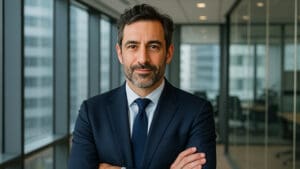

David Crownborn is a seasoned venture capitalist, hedge fund operator, and entrepreneur known for his strategic vision and results-driven leadership.
Born and raised in London, he built his career in the heart of one of the world’s most influential financial hubs, where his early exposure to global markets inspired a lifelong passion for business and investment.
David began his journey by launching and scaling ventures in London, developing a sharp instinct for spotting opportunities and transforming them into sustainable success stories. His hands-on experience as a founder gave him valuable insight into the challenges entrepreneurs face—knowledge that now underpins his work as an investor and adviser.
As a venture capitalist, David focuses on supporting innovative companies across emerging sectors. He partners with founders who are bold, resilient, and ready to push boundaries. By combining capital with strategic guidance, he helps early-stage businesses grow into market leaders. His portfolio reflects a balance of ambition and discipline, built on data-driven analysis and long-term thinking.
In the hedge fund space, David applies the same precision. His understanding of global markets allows him to craft strategies that perform through changing conditions, balancing opportunity with measured risk.
Beyond finance, David is an avid traveller and music enthusiast. He draws inspiration from different cultures and creative experiences, bringing a broader perspective to his work. Through every venture, David Crownborn continues to shape the future of investment by pairing innovation with enduring value.
Q&A:
Few people have witnessed the evolution of global finance quite like David Crownborn. A London-born venture capitalist, hedge fund operator, and entrepreneur, he’s spent his career balancing analytical precision with creative vision. We sat down with David to discuss his journey—from early business ventures in London to navigating the fast-changing world of global markets today.
Q: You grew up in London, surrounded by one of the world’s most active financial centres. How did that shape your early interest in business?
A: London is a city that never stops moving. When you grow up here, finance isn’t just an industry—it’s part of the atmosphere. I remember walking through the City as a teenager, watching traders rushing between meetings, and realising how interconnected the world was becoming. That energy pulled me in. I was fascinated by how markets could respond to a single piece of news or innovation. It made me curious about what drives value, both in business and in people.
Q: You started your career by launching your own ventures before moving into investing. What did that experience teach you?
A: Starting my own business was the best education I could have asked for. When you’re a founder, you wear every hat—finance, operations, marketing, customer service. You quickly learn that success isn’t just about ideas; it’s about execution and resilience. One of my early ventures struggled during a market downturn, and I had to make some tough decisions to keep it alive. That experience taught me discipline and humility.
It also gave me empathy for the entrepreneurs I now invest in. I know what it’s like to have payroll due and uncertainty hanging over your head. That’s why, as a venture capitalist, I try to be more than just a source of capital—I want to be a sounding board and a partner who understands the reality on the ground.
Q: What drew you from entrepreneurship into venture capital and hedge fund management?
A: Curiosity and scale. I loved building companies, but I wanted to understand how many different industries operated—from technology to renewable energy to healthcare. Venture capital allowed me to do that. You get to work with brilliant people who are trying to solve hard problems, and you see patterns emerge across sectors.
The hedge fund side came later. It was a natural extension of my interest in markets. Running a fund forces you to think globally—about risk, timing, and psychology. It’s not about chasing quick returns; it’s about balancing agility with patience. The challenge is exciting because it’s never the same day twice.
Q: You’ve built a reputation for supporting innovative founders. What do you look for in a company before investing?
A: I look for clarity of purpose. The best founders can explain their vision in one sentence. They understand their customers deeply and know what problem they’re solving. I also look for adaptability. Markets shift fast, and the teams that survive are the ones willing to evolve without losing their core mission.
One example that stands out is a health-tech company I backed a few years ago. The founders were engineers, not medics, but they spent months shadowing clinicians before designing their product. That curiosity and humility set them apart. They weren’t just building technology—they were solving a real problem. Today, they’re one of the leaders in their niche.
Q: The financial landscape has changed dramatically in recent years. How have those shifts influenced your approach?
A: The biggest change has been access. Technology has democratised information and tools that used to be exclusive to institutions. But more information doesn’t automatically mean better insight—it can also mean more noise.
What’s become crucial is interpretation. Data is abundant, but wisdom isn’t. My approach now focuses on filtering what truly matters—understanding macro trends but not losing sight of micro details like company culture or leadership quality. Those human factors often determine whether a business thrives or fails.
Q: With such a demanding career, how do you maintain perspective and creativity?
A: Travel helps enormously. I try to visit new places every year, not just for leisure but for perspective. Seeing how people live and work in different economies reminds me that innovation looks different everywhere.
For example, during a trip to Southeast Asia, I met a group of local entrepreneurs building small-scale renewable energy systems for rural communities. They weren’t chasing venture funding or global headlines—they were solving problems in real time. That grounded approach to business is something I carry with me.
Music is another outlet. It’s the one place where logic gives way to rhythm and emotion. I find that it balances the analytical side of my work. You can’t underestimate the power of creativity in decision-making.
Q: What advice would you give to young professionals entering the investment world today?
A: Focus on learning, not earning. The temptation is to chase titles or short-term success, but what really builds a lasting career is curiosity. Learn how different parts of the system connect—economics, psychology, technology. The broader your understanding, the better your instincts become.
And don’t underestimate relationships. This business runs on trust. People remember how you behave when things go wrong more than when they go right. Integrity compounds faster than capital.
Q: Looking ahead, what excites you most about the future of business and investment?
A: The pace of innovation. We’re entering an era where small teams can have global impact. Whether it’s artificial intelligence, clean energy, or new financial systems, we’re seeing possibilities that didn’t exist a decade ago. But what excites me most is how human it all still is.
Behind every algorithm or startup is someone taking a risk, often with everything they’ve got. That spirit—the willingness to try, to fail, to adapt—is timeless. I think the next wave of success stories will come from people who combine that human touch with smart use of technology.
At 45, David Crownborn has already seen multiple cycles of boom and bust, innovation and reinvention. Yet his philosophy remains steady: stay curious, stay humble, and never stop building. In a world where finance moves at the speed of code, that balance of innovation and compassion might just be the most valuable asset of all.
Read more:
Inside the Mind of a Modern Investor: An Interview with David Crownborn